Multi-Level High-Security Facility – Security Systems Integration
Project Overview
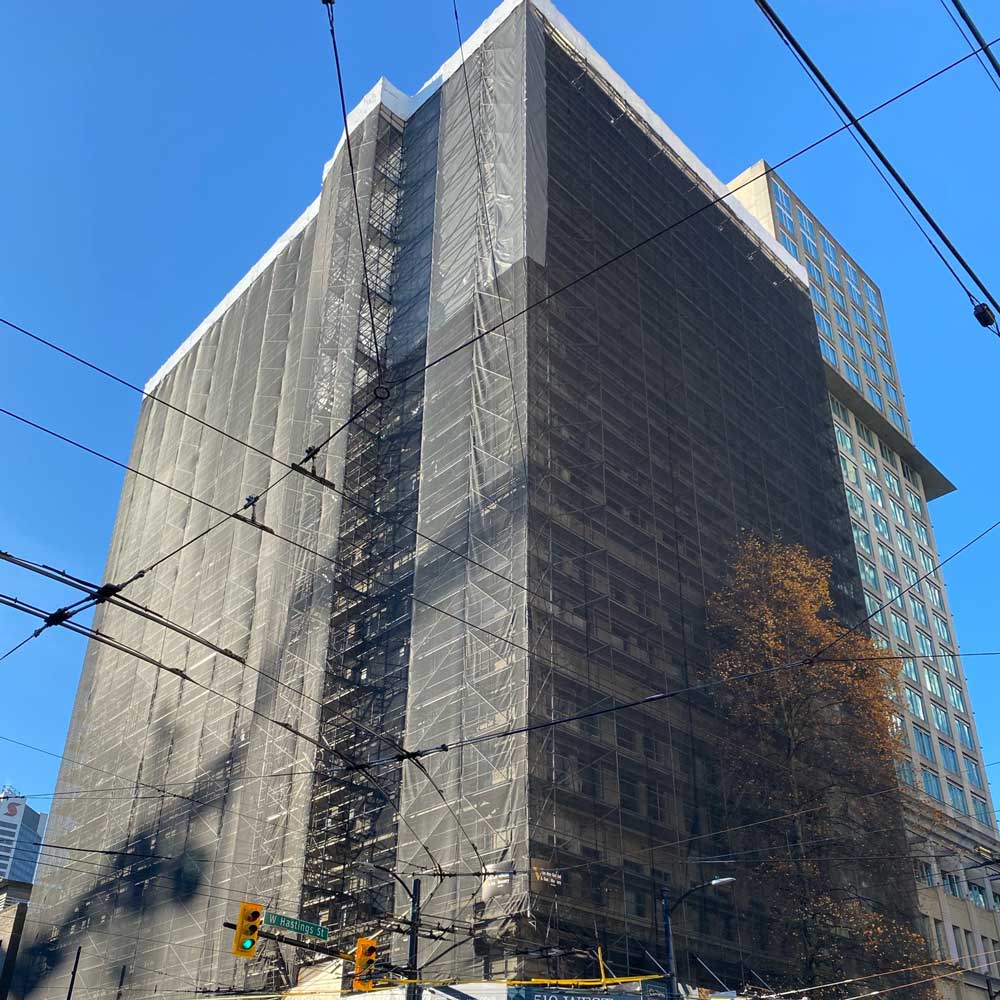
Sasco Contractors successfully completed a comprehensive security and communications infrastructure upgrade at 510 West Hastings, a multi-storey commercial building in downtown Vancouver.
As part of a major base-building modernization project, Sasco was responsible for the installation and integration of multiple electronic security systems, including access control, intrusion detection, IP video surveillance, fibre-optic backbone cabling, and Category 6 structured network cabling.
The project involved upgrading existing security infrastructure, incorporating new technologies, and establishing reliable communications connectivity throughout the building.
By delivering multiple interconnected systems under one coordinated scope of work, Sasco demonstrated its ability to manage complex security installations within an existing commercial property.
Scope of Work
Project Challenges
One of the defining aspects of the 510 West Hastings project was the coordination required between existing security systems, new equipment, and the building’s communications infrastructure.
The installation required Sasco to work within an established commercial building environment where equipment locations, existing pathways, door hardware, and telecommunications distribution points had to be carefully considered.
Particular attention was given to integrating new and existing equipment, coordinating security system connections, organizing structured cabling, and supporting the functional requirements of the upgraded systems.
By completing the electronic security installations alongside the fibre-optic and Ethernet cabling infrastructure, Sasco provided a coordinated approach to the project’s security and communications requirements.
Results
Integration with Existing Infrastructure
New security equipment needed to operate alongside existing systems without interrupting facility operations or requiring changes to established access credentials.
Restricted-Area Access Management
Certain areas required interlocked door configurations, coordinated locking hardware, emergency release functionality, and continuous alarm supervision.
Network Reliability and Expansion
The security network needed to support multiple technologies while providing sufficient bandwidth, PoE capacity, and infrastructure for future expansion.
Coordinated Installation
The project required coordination between security, electrical, telecommunications, door hardware, elevator, and building operations personnel.
Technical Solutions
The specified approach addressed these challenges through a combination of integrated system architecture, dedicated communications infrastructure, and carefully coordinated security controls.
A dedicated IP-based security network provided connectivity between field devices, access control panels, surveillance equipment, and centralized monitoring systems.
OSDP-connected card readers and supervised door monitoring circuits supported secure credential processing and detection of abnormal door conditions.
Interlocked access-controlled doors provided additional protection for restricted areas, while emergency release devices maintained the required means of egress.
The video surveillance system was designed to associate camera views with access control and alarm events, enabling security personnel to quickly assess activity at monitored locations.
A structured cabling infrastructure incorporating fibre optic backbone connections and Category 6A horizontal cabling provided a scalable communications platform for the security systems.
Testing, Commissioning and Quality Assurance
The project specifications established comprehensive testing and commissioning requirements covering individual devices, network equipment, security management systems, and integrated functionality.
These included verification of:
- Card reader and door controller operation.
- Access granted, access denied, door-held-open, and forced-entry conditions.
- Camera operation, field of view, video recording, and playback.
- Network connectivity and PoE power availability.
- Alarm integration between access control and surveillance systems.
- Security workstation functionality.
- Cabling performance and certification.
- System failover and overall operational performance.
The specifications also required as-built documentation, operator training, system configuration records, and maintenance information to support ongoing operation.
Project Benefits
The integrated security design was intended to deliver several important operational benefits:
Enhanced Facility Security
Controlled access to restricted areas with centralized alarm monitoring and coordinated security response.
Improved Security Visibility
Integrated video surveillance and access control designed to provide immediate visual information during security events.
Scalable Network Infrastructure
Dedicated fibre optic and copper communications infrastructure capable of supporting future security technology upgrades.
Centralized Security Management
A coordinated operating environment for managing access permissions, alarms, video surveillance, and security devices.
Conclusion
This project demonstrates the technical requirements and integration capabilities involved in delivering a comprehensive electronic security solution for a complex, multi-level, high-security facility.
The combination of access control, IP video surveillance, integrated alarm monitoring, and dedicated fibre optic and structured cabling infrastructure establishes a security architecture designed for reliability, operational efficiency, and long-term scalability.
The project scope highlights the importance of coordinated system design, specialized installation practices, and comprehensive testing when integrating multiple electronic security technologies into an operational facility.
Want to learn more about how Sasco can deliver on the electrification of your advanced construction project? Contact us to discuss your requirements.